- Jun 29 Wed 2016 22:42
-
英國退歐對金融市場的影響 (網路消息)
- Feb 23 Wed 2011 23:39
-
Rescuers Work to Find Survivors of a Powerful New Zealand Earthquake
New Zealand — Rescue workers spent a cold, rainy night pulling survivors from the wreckage caused by a powerful earthquake that struck Christchurch, New Zealand’s second largest city, early Tuesday afternoon, killing at least 75 people.
Multimedia
Multimedia
- Feb 23 Wed 2011 23:23
-
Tunisians Turn to Everyday Matters
By THOMAS FULLER
Published: February 13, 2011
TUNIS — Bakers have threatened to stop making baguettes unless their salaries are increased. Lawyers demanding judicial independence protested outside the Justice Ministry. Unemployed miners slept in the halls of the headquarters of a phosphate mining company, demanding more jobs.
Multimedia
Published: February 13, 2011
TUNIS — Bakers have threatened to stop making baguettes unless their salaries are increased. Lawyers demanding judicial independence protested outside the Justice Ministry. Unemployed miners slept in the halls of the headquarters of a phosphate mining company, demanding more jobs.
Multimedia
- Apr 20 Tue 2010 23:41
-
As Europe Reopens Skies, a New Cloud Looms

European authorities began easing six days of severe flight restrictions on Tuesday, but a new ash cloud, reported to be spreading south from the erupting volcano in Iceland, threatened to thwart part of the effort to end the Continent’s worst aviation crisis.
Multimedia
- Apr 09 Fri 2010 22:16
-
Red Shirts occupy satellite station after brief clash with security force
BANGKOK, April 9 (TNA) – Red-shirted anti-government protesters of the United Front for Democracy against Dictatorship (UDD) on Friday stormed into a satellite ground station compound after a brief clash with police and military assigned as a security force, with water cannon and tear gas used to disperse the crowd for the first time since the government declared a state of emergency on Wednesday.
The red-clad demonstrators led by Jatuporn Prompan and Nattawut Saikua marched from their meeting point at Pratunam to the Thaicom satellite TV ground station in Pratumthani province Friday noon, demanding that the government restore the satellite signal of the Red Shirt’s People Channel (PTV).
PTV is the primary communication channel between the Red Shirt leaders and their supporters in the provinces. The government pulled the plug on the satellite-based station under emergency rule, citing that it aired distorted information which negatively affected national security and incited chaos.
The red-clad demonstrators led by Jatuporn Prompan and Nattawut Saikua marched from their meeting point at Pratunam to the Thaicom satellite TV ground station in Pratumthani province Friday noon, demanding that the government restore the satellite signal of the Red Shirt’s People Channel (PTV).
PTV is the primary communication channel between the Red Shirt leaders and their supporters in the provinces. The government pulled the plug on the satellite-based station under emergency rule, citing that it aired distorted information which negatively affected national security and incited chaos.
- Jan 24 Sun 2010 21:45
-
The Haiti Earthquake

One of the worst-ever natural disasters in the western hemisphere leaves the Haitian capital of Port-au-Prince(太子港) in ruins
Read more: https://www.time.com/time/specials/packages/article/0,28804,1953379_1953494_1955502,00.html#ixzz0dXPJwvS5
For Taiwan, Helping Haiti Offers Rare Moment on World Stage
Read more: https://www.time.com/time/specials/packages/article/0,28804,1953379_1953494_1955502,00.html#ixzz0dXPbQAIN
- Oct 08 Thu 2009 08:37
-
Two major earthquakes strucK

Two major earthquakes struck 15 minutes apart Thursday morning near the Solomon Islands in the Pacific Ocean, the U.S. Geological Survey said.
The first quake, with a magnitude of 7.8, struck at 9:03 a.m. (6:03 p.m. ET) at a depth of 35 km (22 miles) and an epicenter 295 km (180 miles) north-northwest of Luganville, Espiritue Santo, Vanuatu.
- Oct 06 Tue 2009 23:39
-
Quake and Tsunami Death Toll Could Be in the Thousands
- Aug 20 Thu 2009 21:32
-
Typhoon Survivors Are Found in Taiwan

CHISHAN, Taiwan — As the rain tapered off and the sun briefly appeared, helicopters resumed their search on Wednesday morning for scores of people believed missing in landslides and flooding that hit these rugged mountains of southern Taiwan last weekend.
- Aug 05 Wed 2009 14:41
-
朱豪宅(朱學恆)的網路開放課程上了NY Times
M.I.T. Education in Taiwan, Minus the Degree
Sign In to E-Mail or Save This
Print
Reprints
ShareClose
LinkedinDiggFacebookMixxMySpaceYahoo! BuzzPermalinkBy NOAM COHEN
Published: April 2, 2007
Correction Appended
LUCIFER CHU, a 31-year-old from Taipei, Taiwan, is as good an example as any of the shrinking distances between East and West.
Skip to next paragraph
Lonni Sue Johnson
Mr. Chu has become a millionaire by creating Chinese translations of fantasy novels. Using much of the $1 million in royalties from his versions of “The Lord of the Rings,” Mr. Chu says he devotes himself to distributing free translations of material from a Massachusetts Institute of Technology Web site.
When M.I.T. introduced its OpenCourseWare project six years ago, it was a radical departure. The project was intended to make virtually all of the institute’s course materials available online — free — over a 10-year period at the cost of $100 million. (The material is provided under a Creative Commons license, which, among other things, forbids its being used for commercial purposes, but allows it to be copied and used for other purposes.)
The university’s good intentions came with some concerns: it’s not easy to share the lecture notes, slide presentations, sample tests, syllabuses and reading lists that go into an M.I.T. course. First, faculty members have to agree to go along. Also, the 25 people who work on OpenCourseWare have had to obtain permission to use other people’s creative work that crops up in the slides and lectures.
•
Finally, there was the concern that if M.I.T. gives away this material, would students still pay the $33,600 tuition to attend? It should go without saying that M.I.T. has continued to fill its classes, and that the piece of parchment with a graduate’s name on it, or even a realistic copy, still cannot be found online.
If anything, university officials say, the material has served to stoke the interest of potential applicants.
“A student was going to be coming to M.I.T. as an undergrad, and he sent me an e-mail that said he had already attended my lectures,” said Anant Agarwal, whose lectures for the introductory electrical engineering course are available as streaming video at the OpenCourseWare site, ocw.mit.edu. “And he was from Malaysia.”
In fact, things have been moving swimmingly, administrators say. By the end of the year, the first phase should be over, according to Steve Carson, the project’s director of external relations, with nearly all 1,800 courses having some sort of representation online; the cost has been $30 million. Currently, there are more than 1,600 courses published, and 2 million visits a month.
“It is so much bigger than we could have ever imagined,” said Shigeru Miyagawa, a professor of linguistics and Japanese, who was on the committee that originally proposed the plan. “The number of visits that we get is beyond belief. We really didn’t know who would be using it when we went into this at the very beginning.”
The president of M.I.T. at the time, Charles M. Vest, anticipated as much, saying that “there will probably be a lot of uses that will really surprise us and that we can’t really predict.”
Mr. Chu’s efforts qualify as a pleasant surprise. His team, which includes four full-time editors and scores of volunteers, has completed translations of 178 courses, and more than 600 partial ones. Thirty-five are good enough that M.I.T. links to them directly.
Mr. Chu personally worked on the introduction to electromagnetism, a subject that had bedeviled him at National Central University in Taiwan — he flunked it two times, he said. “I couldn’t help thinking that if I could have gotten a decent electrical magnetism teacher, and had it gone better, maybe I could be working at a big company in Taiwan,” he said.
Mr. Chu is proof that even translators can lose something in translation. He says he innocently adopted the English first name Lucifer as a teenager because of its poetic meaning in Latin, “light bearer.” Today, he says he travels Taiwan and China speaking on the opportunities from OpenCourseWare, using his royalty money to address an estimated total audience of 50,000, telling them to take advantage of “good people with the good will to share their knowledge.”
The M.I.T. OpenCourseWare Web site demands a lot from its visitors. One must decide what subject to study from a vast array, and then must show the determination of a true self-starter.
There is, for example, the graduate-level course “Topics in Philosophy of Language: Vagueness,” offered in the fall of 2005. The course promises “to give people a sense of what ‘accounting for vagueness’ is all about, why it’s hard, and why it’s important.” There is a reading list, a syllabus and a sample paper.
•
While “Vagueness” is certainly on one end of the spectrum, there are relatively few courses that hold your hand. (A class on archery presents a litany of short clips showing how to hold a bow and arrow, and roughly 25 introductory courses, like Professor Agarwal’s on electrical engineering, have their lectures on videotape or audiotape.)
Anne Margulies, executive Director of OpenCourseWare, said that, “the best thing M.I.T. can do is share what we have here to those who can’t come here and hope others would do the same thing.” To that end, M.I.T. has been promoting a consortium of schools to expand the materials available here and around the world.
Mr. Chu is unabashed in his enthusiasm of his nonprofit project, with the sly name OOPS, for “Opensource Opencourseware Prototype System,” at www.myoops.org. And he cites a lesson that he says he learned from Isaac Asimov’s “Foundation” series, a translation project that he has put on indefinite hold: “Knowledge can solve any problems — people choose bad leaders mostly because they don’t have enough knowledge.”
Correction: April 9, 2007
A headline in Business Day last Monday with an article about the translation of course materials at the Massachusetts Institute of Technology into Chinese misstated the location of the project. It is based in Taiwan, not mainland China.
https://www.nytimes.com/2007/04/02/technology/02link.html?ei=5088&en=dcf9f2c3175ed3bf&ex=1333166400&adxnnl=1&partner=rssnyt&emc=rss&adxnnlx=1175791301-n8hrearYAXvKRUvLYvCMVQ
Sign In to E-Mail or Save This
Reprints
ShareClose
LinkedinDiggFacebookMixxMySpaceYahoo! BuzzPermalinkBy NOAM COHEN
Published: April 2, 2007
Correction Appended
LUCIFER CHU, a 31-year-old from Taipei, Taiwan, is as good an example as any of the shrinking distances between East and West.
Skip to next paragraph
Lonni Sue Johnson
Mr. Chu has become a millionaire by creating Chinese translations of fantasy novels. Using much of the $1 million in royalties from his versions of “The Lord of the Rings,” Mr. Chu says he devotes himself to distributing free translations of material from a Massachusetts Institute of Technology Web site.
When M.I.T. introduced its OpenCourseWare project six years ago, it was a radical departure. The project was intended to make virtually all of the institute’s course materials available online — free — over a 10-year period at the cost of $100 million. (The material is provided under a Creative Commons license, which, among other things, forbids its being used for commercial purposes, but allows it to be copied and used for other purposes.)
The university’s good intentions came with some concerns: it’s not easy to share the lecture notes, slide presentations, sample tests, syllabuses and reading lists that go into an M.I.T. course. First, faculty members have to agree to go along. Also, the 25 people who work on OpenCourseWare have had to obtain permission to use other people’s creative work that crops up in the slides and lectures.
•
Finally, there was the concern that if M.I.T. gives away this material, would students still pay the $33,600 tuition to attend? It should go without saying that M.I.T. has continued to fill its classes, and that the piece of parchment with a graduate’s name on it, or even a realistic copy, still cannot be found online.
If anything, university officials say, the material has served to stoke the interest of potential applicants.
“A student was going to be coming to M.I.T. as an undergrad, and he sent me an e-mail that said he had already attended my lectures,” said Anant Agarwal, whose lectures for the introductory electrical engineering course are available as streaming video at the OpenCourseWare site, ocw.mit.edu. “And he was from Malaysia.”
In fact, things have been moving swimmingly, administrators say. By the end of the year, the first phase should be over, according to Steve Carson, the project’s director of external relations, with nearly all 1,800 courses having some sort of representation online; the cost has been $30 million. Currently, there are more than 1,600 courses published, and 2 million visits a month.
“It is so much bigger than we could have ever imagined,” said Shigeru Miyagawa, a professor of linguistics and Japanese, who was on the committee that originally proposed the plan. “The number of visits that we get is beyond belief. We really didn’t know who would be using it when we went into this at the very beginning.”
The president of M.I.T. at the time, Charles M. Vest, anticipated as much, saying that “there will probably be a lot of uses that will really surprise us and that we can’t really predict.”
Mr. Chu’s efforts qualify as a pleasant surprise. His team, which includes four full-time editors and scores of volunteers, has completed translations of 178 courses, and more than 600 partial ones. Thirty-five are good enough that M.I.T. links to them directly.
Mr. Chu personally worked on the introduction to electromagnetism, a subject that had bedeviled him at National Central University in Taiwan — he flunked it two times, he said. “I couldn’t help thinking that if I could have gotten a decent electrical magnetism teacher, and had it gone better, maybe I could be working at a big company in Taiwan,” he said.
Mr. Chu is proof that even translators can lose something in translation. He says he innocently adopted the English first name Lucifer as a teenager because of its poetic meaning in Latin, “light bearer.” Today, he says he travels Taiwan and China speaking on the opportunities from OpenCourseWare, using his royalty money to address an estimated total audience of 50,000, telling them to take advantage of “good people with the good will to share their knowledge.”
The M.I.T. OpenCourseWare Web site demands a lot from its visitors. One must decide what subject to study from a vast array, and then must show the determination of a true self-starter.
There is, for example, the graduate-level course “Topics in Philosophy of Language: Vagueness,” offered in the fall of 2005. The course promises “to give people a sense of what ‘accounting for vagueness’ is all about, why it’s hard, and why it’s important.” There is a reading list, a syllabus and a sample paper.
•
While “Vagueness” is certainly on one end of the spectrum, there are relatively few courses that hold your hand. (A class on archery presents a litany of short clips showing how to hold a bow and arrow, and roughly 25 introductory courses, like Professor Agarwal’s on electrical engineering, have their lectures on videotape or audiotape.)
Anne Margulies, executive Director of OpenCourseWare, said that, “the best thing M.I.T. can do is share what we have here to those who can’t come here and hope others would do the same thing.” To that end, M.I.T. has been promoting a consortium of schools to expand the materials available here and around the world.
Mr. Chu is unabashed in his enthusiasm of his nonprofit project, with the sly name OOPS, for “Opensource Opencourseware Prototype System,” at www.myoops.org. And he cites a lesson that he says he learned from Isaac Asimov’s “Foundation” series, a translation project that he has put on indefinite hold: “Knowledge can solve any problems — people choose bad leaders mostly because they don’t have enough knowledge.”
Correction: April 9, 2007
A headline in Business Day last Monday with an article about the translation of course materials at the Massachusetts Institute of Technology into Chinese misstated the location of the project. It is based in Taiwan, not mainland China.
https://www.nytimes.com/2007/04/02/technology/02link.html?ei=5088&en=dcf9f2c3175ed3bf&ex=1333166400&adxnnl=1&partner=rssnyt&emc=rss&adxnnlx=1175791301-n8hrearYAXvKRUvLYvCMVQ
- Jun 04 Thu 2009 18:15
-
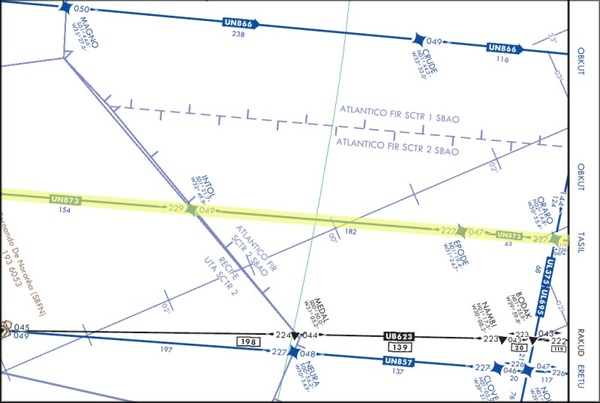
Air France 447

Air France Flight 447: A detailed meteorological analysis
3 06 2009
NOTE: This writeup is from an acquaintance of mine who wrote some powerful meteorological software, Digital Atmosphere, that I use in my office. He used that software (and others) to analyze the Air France 447 crash from the meteorological perspective. h/t to Mike Moran – Anthony
- Jun 04 Thu 2009 17:25
-
Taiwan Tech Firms Strive to Be Global

Acer laptops running Google's new Android operating system at the Computex trade show in Taipei, Taiwan.By ASHLEE VANCE